Tradie Forms: complete QLD Form 21 on the official Queensland PDF layout at final inspection close-out. Record owner, property, approval, performance, inspection stage, certifier, signature and date details before the owner or office has to chase the finished certificate.
QLD Form 21 is the final inspection certificate for single detached class 1a buildings and class 10 buildings or structures in Queensland, excluding swimming pools and swimming pool fences. It is the form that lands at the end of the job, when everyone wants the paperwork finished cleanly.
That final stage can be busy. The owner wants confirmation. The builder wants closeout. The certifier is checking inspection documentation, related certificates, outstanding items, approval numbers and dates. A flat PDF does not make that easier on a phone.
Use the QLD Form 21 template when you want a section-by-section fill, saved certifier and owner details, missing-field checks, official PDF preview and a clean download. You can also browse QLD building forms, or open related forms such as QLD Form 16, QLD Form 12 and QLD Form 43 when they form part of the inspection documentation.
What is Form 21 for?
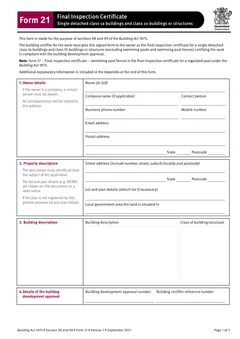
The official Form 21 PDF says it is made for sections 98 and 99 of the Building Act 1975. It is for the building certifier for the work to give a signed final inspection certificate to the owner for single detached class 1a buildings and class 10 buildings or structures, excluding swimming pools and swimming pool fences.
The form records the owner, property, building, building development approval, any performance requirements used for performance-based solutions, inspection and certificate dates for stages, certifier details, signature and date.
The official appendix explains that Form 21 is completed when the building certifier is satisfied the final stage of building work complies with the building development approval and the inspection was carried out under best industry practice. It also notes that Form 17 is the final inspection certificate for regulated pools.
Tradie Forms maps your entries onto the official PDF layout. It does not decide whether the final stage complies or whether the required inspection documentation is complete. The certifier remains responsible for checking the work, supporting documents and finished PDF before issuing it.
This is building Form 21, not plumbing Form 19. Plumbing final inspection certificates follow a different pathway. Keep those forms distinct when a site pack mixes building and plumbing close-out.
Why does final close-out get messy?
Final inspection paperwork is not hard because the form is long. It is hard because it sits at the end of many smaller decisions.
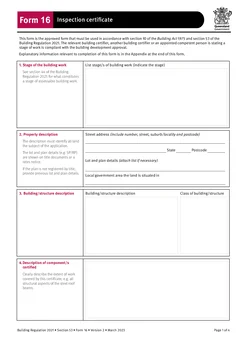
The certifier may be relying on previous Form 16 inspection certificates, aspect certificates, compliance certificates, notices, photos and other inspection documentation. The job may have changed hands. The owner details may have been updated. The building approval number may have been copied across several emails. A performance-based solution may need to be listed clearly.
That is why Form 21 is best finished while the final inspection file is open. If the certifier has already checked the inspection documentation and all building work has been inspected, the form can be completed with the actual documents in front of you instead of from memory. For filing and owner handover habits, see the Form 21 record keeping guide. For the plumbing final inspection certificate, compare the QLD Form 19 guide..
What to collect before you start
Before filling Form 21, get the job file into one view. You do not need to upload everything into Tradie Forms, but you do need the details handy.
Collect:
- Owner name, company name where applicable, contact person, phone, email and postal address
- Property street address, lot and plan, and local government area
- Building description and class
- Building development approval number
- Building certifier reference number
- Performance requirements if a performance-based solution is used
- Inspection and certificate dates for relevant stages
- Related inspection documentation relied on by the certifier
- Building certifier licence and contact details
That list sounds basic. On a busy job, it is exactly where the errors creep in.
Owner, property, building and approval details
The official form asks for owner details first. If the owner is a company, the form asks for a contact person. It also says correspondence will be mailed to the address supplied.
Do not assume the site contact is the owner. On investor builds, small developments, company-owned sheds and family jobs, the person meeting you on site may not be the person who needs the final certificate.
The property block should identify all land subject to the application. Check the lot and plan against title documents, rates notice or approval information, not just the job address. A final inspection certificate with the wrong lot and plan detail can be painful to fix after sign-off.
The building description should tell a clear story.
If the final certificate relates to a class 10 shed, carport, garage or other structure, name it clearly.
The approval section asks for the building development approval number and the building certifier reference number. Check them before download, especially when the same builder has several jobs in one estate or when the office has reused an old file name.
Performance standards and stage dates
If the building work uses a performance-based solution, the form asks you to list the performance requirements used. Do not invent wording here. Use the approval documents, performance solution documentation or certifier file as the source.
If no performance-based solution applies, handle the field consistently with the certifier's normal record keeping. The important point is that the finished certificate should match the approval file.
Form 21 includes a certification table for stages such as foundation and excavation, footing or slab, frame, final and other stages. It asks for inspection dates and certificate dates. These dates help connect the final certificate to the inspection trail. If the certifier relied on inspection certificates from earlier stages, use the dates from those records. If the dates are missing, sort that out before download. The final certificate is not the place to tidy a broken file by guessing.
Common Form 21 mistakes
Owner details copied from the wrong contact
The owner block is not always the same as the builder, tenant or person who opened the gate. Confirm who the certificate is being issued to.
Lot and plan details skipped
A street address alone may not identify the land properly. Use the title, rates or approval details.
Stage dates entered from memory
Use actual inspection and certificate records. If a previous stage certificate is missing, find it before you sign the final certificate.
Related certificates are not kept with the final PDF
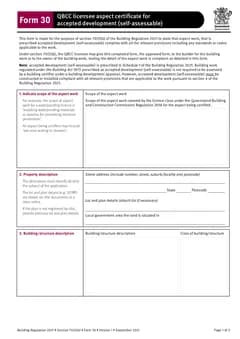
The official Form 21 appendix refers to inspection documentation relied on by the certifier, including examples such as Form 16, Form 43 and Form 12. Keep those records together.
Pool fencing confusion
The Form 21 PDF notes that Form 17 is the final inspection certificate for a regulated pool. Do not use Form 21 to cover pool or pool fence work if the official requirements point to a different form.
How Tradie Forms helps
Tradie Forms turns Form 21 into sections you work through one at a time instead of a flat PDF. The workflow follows the official layout: owner details, property description, building description, building development approval details, performance standards, certification stage dates, building certifier details, and signature and date.
You can save repeat certifier details and owner contact details, catch missing required fields before download, preview the official PDF layout, and download the finished Form 21 for the owner and job record. That helps the final inspection feel less like a scramble. You can finish the certificate while the certifier file is open, then attach the finished PDF to the job record or hand it over through the channel your business uses.
Record keeping after Form 21
The official Form 21 appendix says the building certifier is required to attach relevant inspection documentation relied on to certify the building work. It also says a private certifier must give relevant local government copies of inspection documentation within five business days after certain events, and notes building certifier record keeping requirements.
For day-to-day workflow, keep Form 21 beside Form 16 stage inspection certificates, Form 12 aspect inspection certificates, Form 43 QBCC licensee aspect certificates, compliance certificates, notices given about inspections, certificate of occupancy documents where relevant, and photos, reports, approval documents and correspondence relied on.
Do not make the office reconstruct the final close-out from five inboxes. A neat final PDF is useful, but the supporting file matters too. Before sending the certificate, open the PDF preview and read it like the owner or council file will read it later.
Next steps
Start the QLD Form 21 final inspection certificate when the final inspection record is ready to issue. For owner copy and filing habits, read the Form 21 record keeping guide.
For earlier stage or aspect paperwork, open QLD Form 16, QLD Form 12 or QLD Form 43, or browse QLD building forms.
Official references
Check the Business Queensland building forms page, the Queensland Form 21 PDF, the Business Queensland stages of a building inspection guidance, and the Queensland Building Regulation 2021 forms update before relying on this guide.