Tradie Forms: complete QLD PDR Form 12 for specialist plumbing or drainage work one section at a time, then preview the official PDF layout before the statement goes with the permit paperwork.
Form 12 turns up at the point where a Queensland plumbing permit application needs a specialist work statement clear enough for council to read without chasing loose notes. The question most people actually have is not how to fill it in - it is whether this job needs one, and who is allowed to sign it.
This guide answers those two. For the field workflow, see preparing Form 12 statements on site.
Open the QLD PDR Form 12, or browse QLD plumbing forms. Working interstate? The plumbing forms hub lists the lot.
What the form is
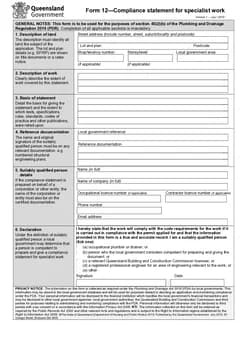
Business Queensland lists Form 12 as the "Compliance statement for specialised work" among the forms for the Plumbing and Drainage Act 2018. The official PDF says it is used for section 45(2)(b) of the Plumbing and Drainage Regulation 2019, and that completion of all applicable sections is mandatory.
It is not the building Form 12 aspect inspection certificate - that belongs to a different form set entirely. If there is any doubt in your office about which one is being discussed, PDR Form 12 vs building Form 12 sorts them out.
When Form 12 turns up on a job
Form 12 is most useful before the permit application goes in, or while the permit pack is being prepared. The job has a specialist element council needs to understand before assessment, the builder is asking whether the plumbing paperwork is ready, or the office is chasing the qualified person's licence and signature.
The moments it commonly appears:
- Specialist work details need to be attached to permit paperwork
- Engineering or other reference documents form part of the permit pack
- Council needs the local government reference and supporting documents to line up
- The work basis needs describing against standards, codes, rules, specifications, or other publications
- The person giving the statement needs to be identified clearly
If you are not sure whether it applies to a particular job, check the current Queensland guidance, the Plumbing and Drainage Regulation 2019, the permit pathway, and local government instructions before preparing the statement. That question is worth resolving before anyone starts typing.
What the person signing is actually declaring
The official form asks the person giving the statement to declare that the work will comply with the code requirements if it is carried out in compliance with the permit applied for.
That wording carries weight. The statement is tied to the permit and to the specialist work described on the form - not to the project generally, and not to work that later diverges from what was permitted. If the scope changes after the statement is given, the statement may no longer fit.
Who is a suitably qualified person?
The form captures the person's full name, company name where applicable, occupational licence number if applicable, contractor licence number if applicable, phone, and email.
The declaration options on the official PDF include:
- An occupational plumber or drainer
- A person the local government considers competent to prepare and give the document
- A relevant QBCC licensee
- A registered professional engineer for an area of engineering relevant to the work
- Another person where specified
Do not treat that list as a menu to pick the most convenient option from. Confirm the right person for the specialist work and for the local government process before anyone signs.
The form also notes that the name and original signature of the suitably qualified person must be on relevant documentation, such as numbered structural engineering plans. That is easy to miss when drawings arrive from several consultants, and it is worth checking before the pack goes out.
What council needs to be able to read
Three sections carry most of the weight.
The land. The official PDF says the description must identify all land the subject of the application - street address, lot and plan, shop or tenancy number, storey or level, and local government area where they apply. A job nickname like "West End fit-out" is fine in the diary and useless on the form.
The specialist work. A council officer should be able to tell what the statement relates to without guessing.
Use the language that appears in the permit documents where you can, so the form, the plans, and the supporting documents all point the same way.
The basis. The PDF asks you to detail the basis for giving the statement and the extent to which tests, specifications, rules, standards, codes of practice, and other publications were relied on. Name them clearly enough that whoever reviews the permit pack can connect the form to the source material.
Before the statement joins the pack
Check that the street address, lot and plan, and local government area identify the land; the work description matches the permit application; the basis names the documents or standards relied on; reference documents are current and signed where required; the qualified person details are correct; the declaration option matches the person signing; and the date and signature are present.
Small errors here make the whole permit pack harder to follow. The goal is a statement council, the builder, and your office can match to the same job without a phone call. The full error list is in common QLD Form 12 mistakes.
Where the Form 12 sits with the rest of the pack
The statement rarely travels alone, and its value depends on what it arrives with.
On a typical job it sits alongside the permit documents, the plans the specialist work was designed against, any supporting certificates from the designer, and the inspection records that follow. Someone assessing the pack is checking that the statement matches those other documents, particularly on the description of the work and the identity of the person taking responsibility.
A statement that describes the work differently to the permit is the most common mismatch. It is usually harmless in intent, because the specialist wrote their description and the permit was written by someone else, but it means the pack does not obviously refer to one job. Aligning the wording is a small effort at the time and saves a query later.
Keep the statement with those documents rather than filing it as a standalone certificate. The pack is what gets assessed, not the individual pages.
When the specialist is a subcontractor
Much specialist work is done by a subcontractor engaged by the head plumbing contractor, which creates a gap between the person who did the work and the person managing the paperwork.
The statement is made by the person taking responsibility for the specialist work, so it belongs to the subcontractor rather than the head contractor collecting the pack. A head contractor who fills the form in on the specialist's behalf and asks for a signature has created a document that says one thing and was prepared by someone else.
The practical arrangement is that the subcontractor completes and signs their own statement, and the head contractor collects it into the pack. That takes longer on the day and it is the only version that holds up.
Where a subcontractor is slow to provide it, chase the document rather than filling it in for them. A missing statement is a scheduling problem. A statement prepared by the wrong person is a different kind of problem entirely.
Next steps
Confirm Form 12 is the right form for the job and that the right person is available to sign it, before the permit deadline rather than on the day.
Start QLD PDR Form 12, or browse the QLD plumbing forms list for the wider permit, testing, and completion set. Related records include QLD Form 1, QLD Form 5, QLD Form 14, and QLD Form 19, depending on the job.
Tradie Forms maps your entries onto the official Queensland PDF layout. It does not decide whether Form 12 is required, whether a person is suitably qualified, or whether the work complies.
Official references
Check the Business Queensland plumbing forms page, the current QLD Form 12 PDF, and the Plumbing and Drainage Regulation 2019.