Tradie Forms: complete QLD Form 43 on the official Queensland PDF layout before the aspect certificate leaves site. Capture scope, property, building, aspect, basis, references, certifier numbers, QBCC licence details, signature and date in a clear path through it.
QLD Form 43 is the QBCC licensee aspect certificate for certain Queensland building work. In plain terms, it lets a QBCC licensee state how the aspect work they carried out, or are authorised to certify, complies with the building development approval for a single detached class 1a building or a class 10 building or structure.
This is the form that often turns up at close-out. The certifier asks for the aspect certificate. The builder wants to keep moving. The licensee has the work, drawings, product documents and job notes in front of them, but a flat PDF is fiddly on a phone.
Use the QLD Form 43 template when you want a section-by-section fill, saved QBCC licence details, missing-field checks, official PDF preview and a clean download. You can also browse QLD building forms, or compare related certificates such as QLD Form 30, QLD Form 12 and QLD Form 16.
What is Form 43 for?
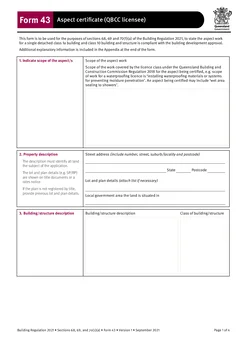
The official Form 43 PDF says it is used for sections 68, 69 and 70(1)(a) of the Building Regulation 2021. It states that aspect work for a single detached class 1a building and class 10 building or structure is compliant with the building development approval.
The appendix says a QBCC licensee completes Form 43 if they carried out the aspect work, or are authorised under the QBCC Regulation, and the aspect work is subject to a building development approval for that class 1a or class 10 work. It also says the completed form may be given to the building certifier or competent person for inspections.
That makes Form 43 different from a general workmanship certificate. It is tied to the QBCC licence class, the aspect work, the relevant property and building, the building development approval, and the basis and references relied on.
Tradie Forms maps your entries onto the official PDF layout. It does not decide whether your licence class is right, whether the work complies, or whether the certifier can rely on the form. The QBCC licensee and certifier remain responsible for checking the certificate and supporting record.
Form 43 or Form 30: which certificate fits?
The easiest mistake is choosing the wrong QBCC aspect form.
Form 43 is for aspect work subject to a building development approval for a single detached class 1a building or class 10 building or structure. It is usually part of the certifier's inspection documentation.
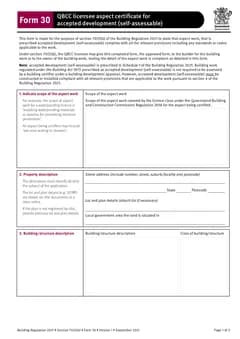
Form 30 is for QBCC licensee aspect certification for accepted development, previously called self-assessable development, where the work is not assessed by a building certifier under a building development approval.
If there is a building development approval and the certifier is asking for an aspect certificate, check Form 43 first. If the job is accepted development, check Form 30 and the Form 30 guide.
Form 12 is different again. That is the aspect inspection certificate from an appointed competent person, not a QBCC licensee aspect certificate under an approval. Keep those roles distinct when the certifier asks for paperwork.
What to collect before you finish the PDF
Form 43 is easiest when you complete it while the work is still fresh. Before you leave site, collect:
- Scope of the aspect or aspects covered by your licence class
- Property street address, lot and plan, and local government area
- Building or structure description and class
- Description of the aspect or aspects certified
- Basis of certification
- Reference documentation
- Building certifier reference number
- Building development approval number
- Date approval to inspect was received from the building certifier
- QBCC licensee name, company, contact, postal address, licence class and licence number
- Signature and date
If you need supporting documents, keep them with the job file. The form can name references, but the full record usually sits in your job software, email folder or project file.
How specific should scope and aspect wording be?
The first field asks for the scope of the aspect work covered by the licence class. The aspect field asks you to describe the aspect or aspects certified.
Those are related, but they are not the same. Scope describes the licence class area. Aspect describes the actual work being certified on this job.
A structural steel certificate works the same way: the scope is the licence class, the aspect identifies the beams, location and drawing references.
Good wording protects everyone. It helps the certifier understand the certificate. It helps the builder know what has been handed over. It helps the office answer questions later. For the rework traps, see common Form 43 mistakes.
Basis, references and licence details
The basis section asks for the basis for giving the certificate and the extent to which tests, specifications, rules, standards, codes of practice and other publications were relied on.
The reference documentation section asks you to identify relevant documents, such as numbered structural engineering plans.
Use both fields properly. The basis tells the reader why you are satisfied. The references tell the reader what documents support that basis. Useful references include engineering drawing numbers and revisions, manufacturer installation instructions, product technical documents, inspection or test records, photos or marked-up plans, and relevant specifications. Avoid vague entries like as per plans if you can name the plans.
The Form 43 PDF also says the QBCC licensee must hold an appropriate class of licence under the QBCC Regulation for the aspect work, or be able under that regulation to give a QBCC licensee certificate for aspect work. Check licensee full name, company name, contact person, phone and email, postal address, licence class, licence number, and the date approval to inspect was received from the building certifier.
Saved licence details in Tradie Forms help you avoid typing the same block on every job. They do not remove the need to check that the details still apply.
Common Form 43 mistakes
The certificate covers too much
If the aspect only covers one area, stage, system or component, keep the wording narrow. Do not make the certificate sound like it covers work you did not carry out or inspect.
The approval to inspect date is missing
The official form includes the date approval to inspect was received from the building certifier. Check the request from the certifier, the job booking or the project correspondence before finishing the PDF.
The approval number is wrong
Approval numbers and certifier references are often copied between jobs. Check them against the certifier request or approval documents.
Form 43 is used for accepted development
If the work is accepted development and not subject to a building development approval, Form 30 may be the better fit.
References are not identifiable
Plans supplied by builder is weak. Use drawing numbers, revisions, dates and titles where possible.
How Tradie Forms helps
Tradie Forms turns QLD Form 43 into sections you work through one at a time for scope, property, building, aspect, basis, references, certifier, licensee and signature.
You can reuse saved QBCC licensee details, catch missing fields before download, preview the official PDF layout and download the finished certificate on site. The point is not to make the legal judgement for you. The point is to make the paperwork easier to finish correctly while the work, approval and references are still close.
Keep the finished Form 43 with building development approval details, the building certifier request or approval to inspect, drawings and specifications relied on, product documents or test records, photos or inspection notes, and related Form 16 or Form 12 records.
Before you send Form 43, read the preview like you are the certifier receiving it. Can you tell what aspect was certified? Can you see the approval number? Are the references specific enough? Does the licence class match the aspect? Tradie Forms can flag missing fields and show the official PDF preview, but it cannot know whether wet area should have said ensuite and laundry. That final judgement stays with the QBCC licensee.
Next steps
Start the QLD Form 43 QBCC licensee aspect certificate when your aspect work is ready to certify. If the job is accepted development, check QLD Form 30.
For rework traps, read common Form 43 mistakes. For the wider certificate map, open the QLD building certificates workflow or browse QLD building forms.
Official references
Check the Business Queensland building forms page, the Queensland Form 43 PDF, the Queensland Form 30 PDF, and the Business Queensland competent persons guidance before relying on this guide.