A Victorian rental electrical safety check is a periodic inspection and test of the property's electrical installation. The rental provider must arrange it every two years, a licensed electrician carries it out, and the electrician gives the rental provider a written report.
It is not a Certificate of Electrical Safety. It is also not a one-off check before a tenancy starts. It runs on a two-year cycle for as long as the property is rented, and the report has to show what was and was not covered.
Who arranges the check and when
The rental provider is responsible for arranging the check. The requirement applies to new residential rental agreements from 29 March 2021, and it continues through the tenancy. It also catches fixed-term agreements of more than five years that roll over into a periodic tenancy after that date.
The check is due every two years. If a property has not been checked in the previous two years when a renter occupies it, the rental provider must arrange a check as soon as practicable. That is the catch for a property that changed hands or sat outside the rental market for a while.
Before entering a rental agreement, the rental provider must disclose the date of the last electrical safety check and any outstanding recommendations from it. A renter whose agreement began before March 2021 can ask for the date of the most recent check in writing.
What the electrician checks
Energy Safe Victoria describes the check as an inspection and test of all electrical switchboards, wiring and fittings in the premises. The work follows section 4 of AS/NZS 3019:2022, the periodic assessment standard.
In practice, the report covers:
- The main switchboard and main earthing system
- Circuits, protective devices and RCDs
- Socket outlets, lighting and fixed appliances
- Visible wiring and connections
- Areas such as kitchens, bathrooms, laundry, garage, pool equipment, solar and battery equipment, and electric water heaters
- Smoke alarms
The extent section matters. A report that ticks every room implies the electrician entered every room. If a tenant refused access, a store was locked, or a system was isolated and left out of scope, the report has to say so.
Before the visit
The check goes faster when the agent or rental provider confirms access to every area, not just the front door. Ask whether the tenant will be home, which rooms or stores are locked, and whether the switchboard is in a common area. Have the previous report ready so the two-year interval and any earlier recommendations are visible.
If the property has solar, a battery, a pool, or an electric vehicle charger, confirm those systems are included and whether the equipment can be isolated. A system that is energised and out of scope should be recorded as not covered rather than ticked.
What the written report must show
The electrician must give the rental provider a written report, in hard copy or digital form. Energy Safe Victoria says the report must include:
- The parts of the tenancy covered by the check and any part not covered
- The results of the testing
- Any repairs required and the actions taken to address them
- Recommendations for repairs where damage or a safety issue was found
- The electrician's full name and business details, including the licence or registration number
- The date of the check
The electrician who carried out the check signs or otherwise authenticates the report. A report completed by someone else, or signed without the test results behind it, does not meet that description.
The record also has to be kept until the record of the next safety check is created. The rental provider must give the renter a copy within seven days after receiving a written request.
Report, COES and periodic verification
Energy Safe Victoria lists three acceptable records for the electrical safety check:
- The Energy Safe Victoria Electrical Safety Check report
- Form 1, the Periodic Verification Report in Appendix A of AS/NZS 3019:2022
- Another form or report that includes the check details, the electrician's name and the date
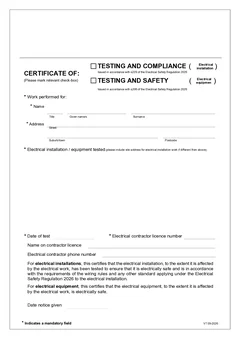
A Certificate of Electrical Safety is not one of them. Energy Safe Victoria says a COES is not the correct form for the tenancy safety check. A COES is issued when electrical repair or maintenance work is carried out after the check.
That distinction is where plenty of jobs get muddled. The safety check records the condition of the installation. The COES records electrical work. If the check finds a defect and the rental provider engages a registered electrical contractor to fix it, the repair work needs its own certificate.
Step 1
Check and report
Licensed electrician
Inspect and test to AS/NZS 3019 section 4, then sign the written report.
Step 2
Keep the record
Rental provider
Keep the report until the next safety check is created.
Step 3
Renter copy
Rental provider
Give a copy within seven days of a written request.
Step 4
Next check
Rental provider
Arrange the next check two years after the previous one.
The safety check record is separate from the COES issued for any repair work.
What the report does not cover
The electrical safety check is not a building inspection, a gas safety check, or a warranty that every appliance is safe. It covers the electrical installation and the items listed on the report. A faulty appliance that is not part of the installation may need its own assessment or repair.
It is also not a certificate for repair work. The check records the condition at the time of the visit. If the property needs a new circuit, a switchboard repair, or a replacement RCD, the repair work needs a COES and, where required, a separate compliance record.
Repairs and defects
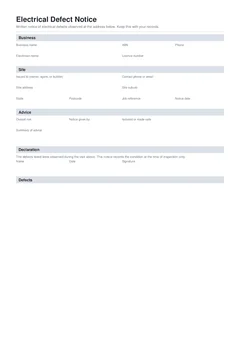
The safety check can find work that needs doing. The report should name the repair or recommendation clearly enough for the rental provider to act on it.
The rental provider should then engage a registered electrical contractor, or a licensed electrician employed by one, to carry out the repair. The safety check itself does not authorise the repair work.
For the electrician, the useful discipline is to separate the three records:
- The safety check report, with test results and scope
- The repair or maintenance work, with its own COES
- The next safety check, which confirms the installation is safe again
Do not let a repair note on the report stand in for the certificate for the work.
What the rental provider should check before filing
Before the report goes into the property file, check that the electrician's name, business details and licence number are on it, the date is the date of the visit, and the parts not covered are listed. Read the observations and make sure each recommendation says what needs doing and where.
Check the smoke alarm result and the next check date. If a repair is recommended, keep the report with the repair quote, the COES for the work, and the next safety check. A report that cannot be matched to the property or the electrician is hard to rely on later.
Smoke alarms
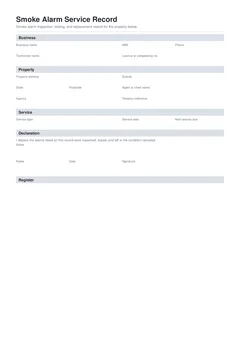
The Energy Safe Victoria report includes smoke alarms. Smoke alarms must be inspected and tested to the manufacturer's instructions at least once every 12 months, which is a shorter cycle than the two-year electrical check.
Record the smoke alarm result and the next check date in the report. If the alarm check falls due before the next electrical check, the rental provider needs that date visible rather than buried in a job note.
Completing the report on site
The report is long because the scope and test sections are detailed. Fill it while the tester is still connected and the switchboard is still open.
Open the VIC Electrical Safety Check report and work through the sections in the Energy Safe Victoria order: installation address, extent of the installation, visual inspection, polarity, earth continuity, RCD tests, smoke alarms, observations and declaration.
The VIC Electrical Safety Check form guide explains each section and the fields that block download. For the RCD readings themselves, use the RCD test intervals and records guide so the trip times and device types are recorded consistently.
Before you leave, check that the parts not covered are clear, the observations name the repairs, and the licence details match the person who did the work.
Common mistakes
- Ticking every room when access was limited
- Leaving the extent section blank because the property is a standard house
- Leaving the time-test result out when you ran the RCD test, or recording only a bare pass
- Using a COES as the safety check record
- Issuing a report with no scope for a defect that needs a repair
- Signing a report completed by someone who did not carry out the check
- Forgetting the smoke alarm date because it runs on a different cycle
Next steps
If you are the electrician, open the VIC Electrical Safety Check report and complete it at the property. If you are the rental provider or agent, keep the signed report and give the renter a copy within seven days of a written request.
Browse VIC electrical forms for the current report and related records.
Official references
Energy Safe Victoria publishes the residential tenancy guidance and the Electrical Safety Check report. The obligations sit in the Residential Tenancies Regulations 2021. Consumer Affairs Victoria also explains rental providers' gas and electrical safety duties.