Tradie Forms: finish Form 36 before the contract goes out and get the copy to the QBCC before settlement. These guides help QLD builders, agents and owners keep the pool paperwork straight; the same on-site habits apply as we add more Australian trade templates.
A property with a regulated pool is under contract, settlement is close, and there is no current pool safety certificate. In Queensland you cannot just leave that gap silent. The seller has to tell the buyer in writing that no certificate is in effect, and that written notice is the Form 36. Get it to the buyer before the contract, get a copy to the QBCC before settlement, and the sale can proceed with everyone knowing where the pool stands. Skip it and you have left a compliance hole in the transaction.
This guide covers when Form 36 applies, who has to receive a copy, the difference between shared and non-shared pools, and how to complete the notice so it holds up.
If you are completing one today, open the QLD Form 36 notice of no pool safety certificate. Browse other QLD building forms, see the related QLD pool Form 26 nonconformity notice, or read the Form 26 nonconformity notice guide when an inspection finds a pool that does not comply. The QLD building certificates on-site workflow shows how the pool forms sit alongside the rest of your Queensland records.
When does QLD Form 36 apply?
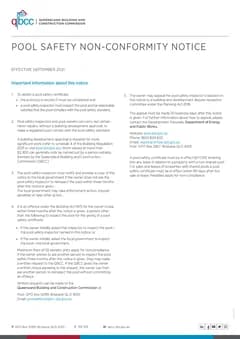
Queensland's pool safety laws sit in the Building Act 1975 and are administered by the QBCC. The rule that drives Form 36 is simple. If a regulated pool does not have a current pool safety certificate at the point of sale, the seller has to give the buyer notice that no certificate is in effect. That notice is the Form 36.
The trigger is the transaction, not the state of the fence. You give the buyer either a pool safety certificate or a Form 36 before entering the contract of sale. If the certificate is current, you hand that over and Form 36 is not needed. If there is no certificate, or it has lapsed, Form 36 is how you meet the disclosure obligation and keep the sale moving.
Leasing works differently depending on the pool. Where the pool is a shared pool, Form 36 is used in the leasing context in the same way it is used for a sale. Where the pool is a non-shared pool, there is no Form 36 shortcut. You must not enter into an accommodation agreement unless a pool safety certificate is in effect. That distinction is the first thing to settle before you reach for the form.
Owner details
The form opens with the property owner. This is the person or entity selling the property or entering the accommodation agreement, along with their contact and postal details.
Get this layer right because it is what ties the notice to the person giving it. The owner named here is the one making the declaration further down the form that no pool safety certificate is in effect. If the property is owned by a company or a trust, the details need to match how the title and the contract read, not a shorthand version.
If you complete these notices across more than one job, the owner and contact fields are the kind of detail worth saving once and reusing rather than retyping.
Property and pool location
Next the form describes the property and where the pool sits. This section captures the address, the lot on plan, and the local government area.
The lot on plan is the part people rush. It is the legal description of the land, and it is what lets the QBCC and the local council match the notice to the right regulated pool on the register.
Pull the lot on plan from the title or the contract so it lands correctly, because a notice recorded against the wrong lot is a notice that does not do its job.
The local government area matters too. Pool safety is a state law, but councils hold local records, and naming the correct LGA keeps the notice consistent with where the property actually sits.
Pool type: shared or non-shared
The form asks you to identify the pool as shared or non-shared, and this is not a formality. It changes who carries the certificate obligation and where the copies go.
A non-shared pool serves a single dwelling, the standard house-with-a-pool situation. A shared pool serves multiple lots, such as the pool in a unit or townhouse complex, where the pool is common property and the obligation sits with the pool owner or body corporate rather than an individual seller.
Two things follow from the answer. First, for a shared pool a copy of the Form 36 must also go to the shared pool owner, commonly the body corporate, on top of the buyer and the QBCC. Second, the certificate timelines differ: a non-shared pool certificate is valid for two years, while a shared pool certificate is valid for one year. Nominate the pool type that matches the property, because everything downstream keys off it.
Purchaser and settlement
The form then records the purchaser or incoming tenant and the details of the agreement.
Purchaser or tenant. This is the party receiving the notice. Their details need to match the contract of sale or the accommodation agreement, because the whole point of Form 36 is that this named party was told, in writing, before they committed.
Sale or lease and the agreement date. The form asks whether this is a sale or a lease and records the proposed settlement or lease commencement date. That date frames the two deadlines that matter: the notice must reach the buyer before the contract, and the copy must reach the QBCC before settlement.
The buyer's own clock starts at settlement. A buyer who takes on a property without a current certificate has to obtain a pool safety certificate within 90 days of settlement. For a shared pool, that obligation falls on the pool owner within the same window. Form 36 does not remove the requirement for a certificate. It records that one is not yet in place and passes the obligation forward.
Declaration and lodging the notice
The form finishes with the owner's declaration, signature, and date. The declaration is the owner stating that no pool safety certificate is in effect for the pool. It should only go on once the owner, property, pool type, and purchaser details are complete and correct, because the signature is the owner standing behind the notice.
Once it is signed, the notice has to move in two directions on time. The buyer or prospective occupier gets their copy before the contract is entered. The QBCC gets a copy before settlement. For a shared pool, the pool owner or body corporate gets a copy as well. The QBCC lets you complete and lodge Form 36 online, and the current version is listed on the Business Queensland pool safety forms page, so work from that rather than an old template pulled from a folder.
Keep a copy with the conveyancing file. If a question comes up later about whether the buyer was told, the signed and lodged Form 36 is the record that answers it.
Common Form 36 mistakes
These are the ones that turn a routine disclosure into a problem at settlement.
Trying to lease a non-shared pool on a Form 36. The form does not authorise this. For a non-shared pool you need a current certificate before the accommodation agreement, not a notice instead of one.
Missing the QBCC copy. Giving the buyer their copy but never lodging with the QBCC leaves the obligation half done. The copy has to reach the commission before settlement.
Forgetting the body corporate on a shared pool. Shared pools need a third copy to the pool owner. Leaving that out is easy when you are focused on the buyer.
Wrong lot on plan. An incorrect legal description means the notice may not attach to the right regulated pool. Confirm it against the title.
Most of these come down to timing and distribution rather than the fence itself. The fix is to complete the notice against the contract details, in order, and send every copy the pool type requires.
How Tradie Forms helps
Tradie Forms turns Form 36 into sections you work through one at a time that follow the order of the official QBCC form. You enter the owner and property details, nominate the pool as shared or non-shared, record the purchaser and the sale or lease date, and complete the declaration as you go.
Owner, contact, and business details are saved and reused, so they are not retyped on every notice. The form flags missing fields before you download, which is what catches an empty lot on plan or a blank settlement date before it reaches the buyer or the QBCC. You preview your entries mapped onto the official Form 36 PDF layout, then download the finished notice to give the buyer, lodge with the QBCC, and store with the conveyancing file.
Tradie Forms maps your entries onto the official layout. The owner or agent giving the notice still checks the details, the pool type, and the downloaded PDF before it goes out.
Start the QLD Form 36 notice of no pool safety certificate against your contract details, or browse more QLD building forms for the rest of your Queensland paperwork.
Official references
Check QBCC buy, sell or lease a property with a pool for the disclosure and 90 day rules, the QBCC Form 36 notice of no pool safety certificate page and the Business Queensland pool safety forms list for the current form, and the Building Act 1975 for the pool safety provisions. Requirements and forms can change, so confirm the current version and the local process before you give notice.