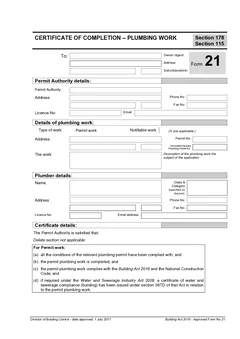
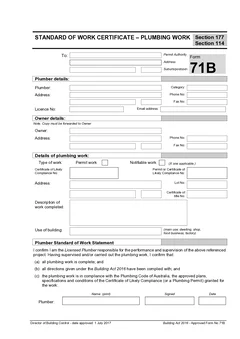
Tradie Forms: keep TAS Form 21 and Form 71B clear in the job record. Fill it in one section at a time, reuse plumber and permit authority details, preview the official PDF layouts and download clean files on site.
Tasmanian plumbing paperwork can get confusing near completion because Form 21 and Form 71B both sound like close-out forms. They are related, but they are not the same form and they should not be treated as interchangeable.
Form 71B is the standard of work certificate for plumbing work. Form 21 is the certificate of completion for plumbing work. On the tools, that difference matters because one points to the plumber's work certificate and the other to the completion certificate record.
This guide compares TAS Form 21 and TAS Form 71B from a field and office point of view. For the wider set, use the TAS plumbing forms list or browse TAS plumbing forms.
What is the short difference between Form 21 and Form 71B?
The CBOS approved forms page lists Form 21 as Certificate of Completion - Plumbing Work and Form 71B as Standard of Work Certificate - Plumbing Work.
In plain language:
- Use Form 71B for the standard of work certificate from the plumber side of the completion record
- Use Form 21 for the certificate of completion record
- Keep both with the job where both apply
- Do not use either form to guess the work category or regulatory pathway
Name the job moment. If the question is "what standard of work has the plumber certified?", look at Form 71B. If the question is "what completion certificate record is being issued for the plumbing work?", look at Form 21.
Where does Form 60 sit before both?
Before comparing the two close-out forms, remember TAS Form 60. The CBOS approved forms page lists Form 60 as the start work notification and authorisation for plumbing work. Existing Tasmanian workflows often start the paperwork before the work begins, then close it out with standard of work and completion records.
A clean job file may include:
- Form 60 before work starts
- Form 71B when the standard of work certificate is due
- Form 21 for the certificate of completion record
The Form 60 and Form 71B workflow guide covers running start and standard of work as one record. This page is only about telling Form 21 and Form 71B apart at close-out.
What does Form 71B capture?
Form 71B records the standard of work certificate for plumbing work. The template in Tradie Forms captures recipient details, plumber details, owner copy details, work type, certificate of likely compliance references where applicable, work site, work description and certification.
For the plumber, Form 71B is often the close-out form that should be completed while the work details are still fresh. It asks for the work site and description of work, not just "job finished".
Good Form 71B habits include:
- Entering the owner details for the owner copy
- Checking plumber licence and contact details
- Matching work type to the job record
- Adding clear work site details
- Writing a work description that can be understood later
- Keeping the PDF with inspection notes and completion records
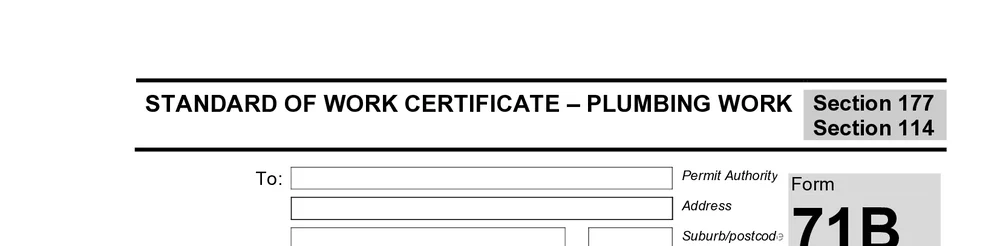
Because Form 71B is close to the work itself, fill it while readings, site notes and scope details are still fresh. A clear work description makes the later completion record easier to understand. Field detail lives in the Form 71B standard of work guide.
What does Form 21 capture?
Form 21 is the certificate of completion for plumbing work. The template in Tradie Forms captures owner or agent details, permit authority details, work classification, property, permit references, plumber details, certificate basis and sign-off.
Form 21 is useful when the completion certificate record needs to be prepared cleanly and stored with the job. It should match the permit file, work details and plumber record.
Good Form 21 habits include:
- Confirming the permit authority for the site
- Entering owner or agent details accurately
- Matching property and permit references to the job record
- Keeping plumber details consistent with related forms
- Previewing the certificate before you complete
- Storing the PDF with the rest of the close-out record
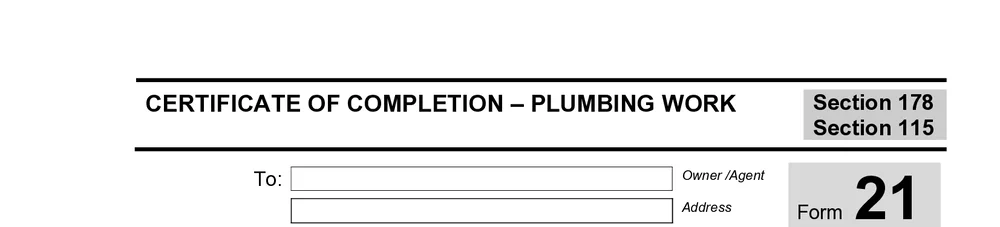
Because Form 21 carries permit authority and sign-off details, check it against the authority's file, not just the plumber's field notes. The plumber's notes help, but the completion certificate record needs to match the official job pathway. See also the Form 21 certificate of completion guide.
Side-by-side field check
If you are recording plumber certification
Form 71B is more likely the form you are thinking of. It asks for plumber details, owner copy details, work type, work site and standard of work certification.
If you are preparing completion certificate records
Form 21 is more likely the form. It asks for owner or agent details, permit authority details, work and plumber details, and sign-off.
If work has not started yet
Do not start with either close-out form. Check whether Form 60 or another approved form is required before work begins.
If the work is unpaid gratuitous work
Check the TAS Gratuitous Work form and current CBOS guidance for prescribed work done without payment. That pathway is separate from the normal Form 21 and Form 71B close-out pair.
Common mix-ups
Sending Form 21 when the owner asked for the plumber certificate. If the owner asks for the plumber's certificate, they may be asking for Form 71B. Confirm the request before sending the wrong PDF.
Preparing Form 71B but forgetting the completion record. The standard of work certificate may not be the last document in the file. Check whether Form 21 is also needed.
Using job nicknames instead of permit references. Both forms should connect to the same job record.
Splitting the forms across different folders. If both apply to the same job, keep them together so future close-out is easier.
Questions to resolve before opening either form
Ask these on site or in the office before someone fills a PDF:
- What category of plumbing work is this under the current Tasmanian process?
- Is there a permit authority, permit reference or certificate of likely compliance that must appear in the record?
- Has the work started, reached a handover point or reached final completion?
- Which licensed person is responsible for the work described on this certificate?
If the answer is unclear, pause and check the CBOS guidance or the permit authority. Guessing from the form number is not a safe workflow. This guide is a field aid, not legal or regulatory advice.
Make the forms agree without copying blindly
Shared details should be consistent, but that does not mean every line belongs on every form. Check the owner name, site address, relevant job reference, plumber details and work description against the source record. Then read the completed PDF as if you were the permit authority or owner receiving it for the first time.
Tradie Forms keeps Form 21 and Form 71B as separate templates and maps each entry to its own official PDF layout. Saved details reduce repeated typing; they still need a job-specific check. Preview the document before download, then store it with the related evidence rather than leaving it in a downloads folder.
Record keeping for both forms
When both Form 21 and Form 71B apply, store them in one close-out folder with:
- Form 60 start work notification where relevant
- Permit or certificate of likely compliance references
- Inspection notes
- As-constructed drawings where relevant
- Owner completion emails
- Photos and site notes
- Any permit authority correspondence
Use filenames that make the difference clear, for example including the form number, site, date and job reference. Send the right document to the right person: the owner may need their copy of the standard of work certificate, and the permit authority may need the record specified by the applicable process. Confirm delivery requirements from current official guidance rather than treating email to one person as the complete process.
When the plumber sends details back to the office, name the form needed and the job stage. A useful note might say Form 71B is ready for the standard of work certificate and Form 21 is still waiting on permit authority sign-off. That is much clearer than "completion form needed".
Next steps
Start TAS Form 71B when the plumber standard of work certificate is due, or TAS Form 21 when the certificate of completion record is being prepared. Use TAS Form 60 before work starts where that notice applies.
For the full stage list, read the TAS plumbing forms list. Browse TAS plumbing forms for the live templates. Working interstate? The plumbing forms hub lists the lot.
Official references
Check the CBOS approved forms page, the CBOS guide to approved plumbing forms, the CBOS Guide to the Building Act 2016, and the current Building Act 2016.