Tradie Forms: use this guide when a Queensland building job needs a certificate and the team is choosing between Form 12 and Form 15. Pick the right job moment, fill the official PDF layout, preview it, and hand the certifier a clean record.
QLD Form 12 and QLD Form 15 sit close together in the building paperwork pile, so they are easy to mix up when a certifier, builder, designer, or subcontractor is pushing to close a job stage.
Both forms involve appointed competent persons. Both can support a building certifier's decision-making. Both ask for clear descriptions, basis of certification, reference documents, competent person details, and a signature. But they are not the same form.
The practical split is this: Form 12 is about an aspect of building work that has been completed and inspected. Form 15 is about a building design or specification that will comply if installed or carried out as stated in the certificate.
That one difference changes what you collect, when you complete the form, and what evidence belongs in the job record.
Start the QLD Form 12 aspect inspection certificate for completed aspect inspection work, or start the QLD Form 15 design or specification certificate when the certificate is about design-specification help. You can also browse all QLD building forms.
What is the difference between Form 12 and Form 15?
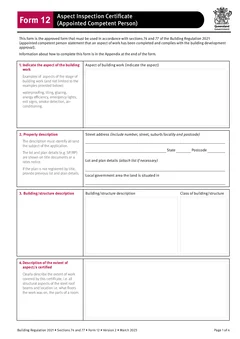
The official Form 12 PDF says it is an aspect inspection certificate for an appointed competent person statement that an aspect of work has been completed and complies with the building development approval.
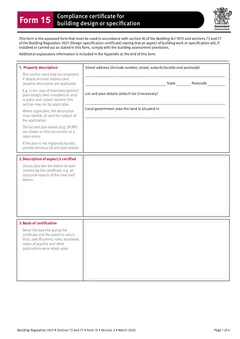
The official Form 15 PDF says it is a compliance certificate for building design or specification. It states that an aspect of building work or specification will, if installed or carried out as stated in the form, comply with the building assessment provisions.
So the first question is not "which PDF looks right?" It is "what job moment are we certifying?"
Use Form 12 when the work has been inspected and the certificate records the aspect of completed work. Use Form 15 when the certificate is about the design, specification, material, system, method of building, or other design-related matter before or beside the work being installed or carried out.
If the answer is still unclear, check the building certifier's request and the current approval documents before downloading anything.
Where Form 12 fits
Business Queensland's competent persons guidance says a building certifier may use a competent person to provide inspection help for aspects of a stage of building work, after the certifier determines that the person is competent for the inspection help.
Form 12 is the aspect inspection certificate for that job. The official form asks for:
- The aspect of building work
- The property description
- The building or structure description and class
- The extent of aspect work certified
- The basis of certification
- Reference documentation
- Building certifier details
- Appointed competent person details
- Signature and date
The Form 12 appendix explains that the person assessed and appointed as a competent person for inspection must complete the form and give it to the building certifier after inspecting the aspect and being satisfied the aspect has been completed and complies with the building development approval.
On site, Form 12 often belongs after a waterproofing, glazing, smoke detection, energy efficiency, emergency lighting, structural, or similar aspect inspection, where the appointment and scope match the job.
Where Form 15 fits
Form 15 is for design-specification help. The official Form 15 appendix says a building certifier can accept from a competent person a certificate stating the competent person has assessed the building design or specification for the aspect of building work and that it will, if installed or carried out under the certificate, comply with the building assessment provisions.
The form asks for:
- Property description where applicable
- Description of aspect or specification certified
- Basis of certification
- Reference documentation
- Building certifier reference and building development application number
- Appointed competent person details
- Signature and date
The Form 15 appendix also says the certificate information informs the building certifier's decision-making when assessing a building development application, issuing the approval, or amending an approval because of updated aspect information.
In job language, Form 15 belongs with the design package or specification record. It might support structural design, glazing specs, truss documentation, excavation drawing revisions, product design, or other design-specification material where the certifier has appointed the person for that help.
Why do the two get mixed up?
The forms look related because they share a similar logic. Both need a competent person. Both ask for basis and references. Both go to the building certifier. Both can mention standards, codes, drawings, tests, specifications, and publications.
The risk comes from using the same wording in the wrong job moment.
If you use Form 15 for completed work inspection, the certificate may not match what actually happened on site. If you use Form 12 for design-specification material, it can sound like an inspection happened when the certificate was really about a design or product specification.
The fix is to start with the evidence:
- Inspection notes, photos, site walk, and completed work point toward Form 12
- Drawings, calculations, product specs, design reports, standards, and specifications point toward Form 15
- A certifier's appointment should say whether the help is inspection or design-specification
What to collect for Form 12
For Form 12, collect the details that prove the inspected aspect is clear:
- Aspect of building work
- Property address, lot and plan, and local government area
- Building or structure description and NCC class
- Exact extent and location of the aspect inspected
- Basis for certification
- Reference documents, test results, standards, or plans relied on
- Building certifier name, reference number, and approval number
- Competent person details and signature
The strongest Form 12 descriptions say what was inspected and where. "Wet area waterproofing to ensuite, bathroom, and laundry in unit 3" is clearer than "waterproofing". "Smoke detection installation to level 1 common corridor and tenancy 1.02" is clearer than "smoke alarms".
Keep supporting photos, inspection notes, marked-up drawings, test reports, and related certificates with the downloaded PDF.
What to collect for Form 15
For Form 15, collect the details that make the design or specification traceable:
- Property details, if they apply
- The aspect or specification being certified
- The basis for certification
- Drawings, calculations, tests, standards, product documents, specs, or other publications relied on
- Building certifier reference number and building development application number where available
- Competent person details and signature
The strongest Form 15 descriptions are specific about the design or specification. "Structural design of steel roof beams shown on drawings S04 to S08, Rev C" is better than "steel". "Glazing specification for shopfront system to tenancy 2, drawing A23, Rev B" is better than "glazing".
If the form does not have enough room for all supporting material, the official Form 15 appendix allows additional material to be created and referred to in an addendum or attachment, provided the approved form section text is not altered.
Form 12 and Form 15 in the certification flow
Business Queensland's inspection stages guidance says building certification involves independently checking and approving building work against safety, health, amenity, and sustainability standards in legislation and building codes. It also says the building approval addresses the inspection schedule and the builder must notify the certifier when building work is ready for inspection.
In that flow, the certifier may need different records at different points.
Form 15 can help before or during approval and design changes, where the certifier needs design-specification support. Form 12 can help after an appointed competent person inspects an aspect of work and gives the certifier the aspect inspection certificate.
Neither form replaces the certifier's role. They give the certifier structured information to consider.
Common mistakes
Picking the form from habit
Some teams use whatever form they used last time. That is risky. Ask whether this certificate is for completed inspected work or design-specification help.
Writing broad descriptions
Broad descriptions create review questions. Use exact locations, stages, documents, systems, or products. The certificate should not sound bigger than the work or design you assessed.
Missing the appointment scope
The competent person appointment matters. A person appointed for inspection help is not automatically appointed for design-specification help, and the reverse is also true. Check the certifier request.
Weak reference documents
Use drawing numbers, revisions, dates, report titles, product specs, standards, and test records where they apply.
Losing the supporting evidence
A PDF without the job evidence is harder to trust later. Keep the certificate with the drawings, specs, notes, reports, photos, and certifier correspondence.
How Tradie Forms helps
Tradie Forms gives each form its own path.
For QLD Form 12, you work through aspect, property, building, extent, basis, references, certifier, competent person, and signature sections.
For QLD Form 15, you work through property, extent, basis, references, certifier, competent person, and signature sections.
In both forms, saved competent person details reduce repeat typing. Address search helps with Queensland property details. Missing-field checks catch key gaps before download. The preview shows the official PDF layout before the certificate is downloaded and sent.
Tradie Forms maps entries onto the official PDF layouts. The appointed competent person and building certifier remain responsible for checking the work, the certificate type, the supporting evidence, and the downloaded PDF.
A quick decision checklist
Before you download, ask:
- Is this certificate about completed work that has been inspected?
- Is this certificate about design or specification?
- Has the certifier appointed the person for the right type of help?
- Does the description match only the work, design, or specification being certified?
- Are the basis and references specific enough?
- Are the certifier reference and approval details correct?
- Will the office be able to find the supporting evidence later?
If the answers point to completed aspect inspection, use Form 12. If they point to design-specification material, use Form 15.
Next steps
Start QLD Form 12 for aspect inspection certificates, start QLD Form 15 for design or specification certificates, or browse the full QLD building forms library.
For the field-level walkthroughs, use the Form 12 aspect inspection guide or the Form 15 design and specification guide. The QLD building certificates workflow shows where both records sit beside Forms 16, 21, 30 and 43.
Official references
For current requirements, check the Queensland Form 12 PDF, the Queensland Form 15 PDF, the Business Queensland inspection stages guidance, and the Business Queensland competent persons guidance.