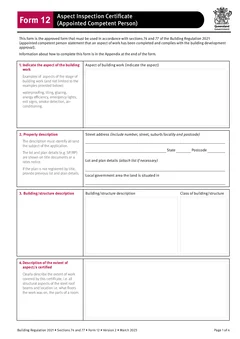
Tradie Forms: complete QLD Form 12 on the official PDF layout while the inspection details are still fresh. Work through the aspect, property, basis, reference documents, competent person details and signature before the certificate goes to the building certifier.
QLD Form 12 looks simple until you are trying to finish it between site noise, phone calls and a certifier waiting for the site pack.
The form is used by an appointed competent person for an aspect inspection certificate in Queensland. In plain site language, it records the aspect of building work you inspected, the property, the building or structure, the extent of work covered, the basis for your certification, the documents you relied on, and your details as the appointed competent person.
The best time to complete it is while the inspection is still in front of you. You know what you looked at. You know which plans, standards, test results or specifications were relied on. You can check the lot and plan, local government area and building certifier details before the job moves on.
Use the QLD Form 12 template when you want a fillable version of the official PDF layout, or browse the full QLD building forms library. For form choice against design certificates, read Form 12 vs Form 15.
What is Form 12 for?
The Queensland Government Form 12 PDF says it is the approved form to be used under sections 74 and 77 of the Building Regulation 2021. It is for an appointed competent person statement that an aspect of work has been completed and complies with the building development approval.
Business Queensland lists Form 12 as Aspect Inspection Certificate (Appointed Competent Person) on its building forms page. That same official forms page also lists related building forms, including Form 15 for design or specification and Form 16 for inspection certificates.
That matters because Form 12 has a specific job. It is not a general building certificate and it is not a note to the builder. It is the record a building certifier may rely on for an inspected aspect of building work.
Business Queensland's guidance on competent persons says a building certifier may use a competent person to help inspect aspects of a stage of building work, after the certifier has determined that the person is competent for that inspection help. The competent person gives Form 12 to the building certifier for the work they complete so the certifier can confirm the stage is complete.
Tradie Forms maps your entries onto the official PDF layout. It does not decide whether you are competent for the inspection, whether the aspect complies, or whether the building certifier can rely on the certificate. That judgement stays with the people responsible under the building approval and current law.
Who completes Form 12?
The Form 12 appendix explains that an individual must be assessed and appointed as a competent person before they can give inspection help to a building certifier. The appointment is not just a casual site request. The building certifier has to decide the person is competent for the type of inspection help.
For the person completing the certificate, the practical check is simple:
- Were you appointed by the building certifier for this inspection help?
- Does the aspect match the help you were appointed to give?
- Did you inspect the aspect, or are you relying on another certificate in a way the regulation allows?
- Are your licence, registration, experience and scope details current where they apply?
- Can you clearly state the basis for your certification?
If any of those questions are unclear, sort that out before downloading the PDF. A neat form is useful, but the certificate still has to match the real job.
Where does Form 12 fit in the job flow?
Building jobs move in stages. The certifier may need certificates for relevant aspects before a stage can be confirmed. Business Queensland's inspection stages guidance explains that mandatory inspections apply to class 1a and class 10 buildings in different ways, and that building approvals may list additional stages that require inspection.
On site, Form 12 usually sits between an aspect inspection and the building certifier's record. It can cover aspects such as waterproofing, tiling, glazing, energy efficiency, emergency lights, exit signs, smoke detection or air-conditioning when that is the aspect being certified and the appointment fits.
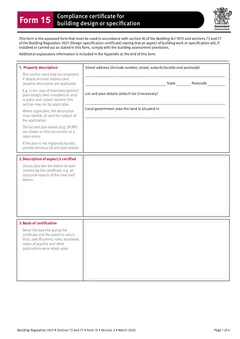
Do not confuse Form 12 with Form 43. Form 43 is a QBCC licensee aspect certificate under a building development approval. Form 12 is the appointed competent person's aspect inspection certificate. Form 15 is design or specification, not completed aspect inspection. For the wider map, see the QLD building certificates workflow.
Details to collect while the inspection is fresh
Form 12 is easiest when you treat it as part of the inspection, not as admin for later. Before you leave the site, check each block against the job record.
Aspect of building work
Start with the aspect. The official form gives examples such as waterproofing, tiling, glazing, energy efficiency, emergency lights, exit signs, smoke detection and air-conditioning.
Do not write a broad label if the certificate only covers a narrow part of the work.
The aspect should match what you inspected and what you were appointed to inspect.
Property, building and extent
The official form asks for a property description that identifies all land subject to the application. It includes street address, state, postcode, lot and plan details, and local government area. Do not rely on the postal address from an invoice. Use the property details tied to the building approval.
Describe the building or structure and include the class. The Form 12 appendix points to the National Construction Code classification. Class 1a dwelling and attached garage tells a clearer story than house.
The extent of aspect work certified is a common rework point. The official form asks you to clearly describe the extent of work covered, including location where relevant. Good extent wording says what was inspected and where. It does not suggest you certified work you did not inspect.
Basis, references and certifier details
The form asks for the basis for giving the certificate and the extent to which tests, specifications, rules, standards, codes of practice or other publications were relied on. Use the standards, drawings, specifications, test results, product documents or other material that actually supported the inspection.
Clearly identify relevant documents. The official form gives numbered engineering plans as an example. Use document numbers, revisions, drawing titles, dates and report references where they are available. Plans is not enough on a busy project.
Record the building certifier's name, reference number and building development approval number. Check these against the approval documents or certifier request, not an old email subject line.
The form also needs the appointed competent person's name, company name where applicable, contact details, postal address, licence class or registration details where applicable, the date the inspection request was received from the certifier, signature and date. Saved details help, but still check them after licence renewals, business address changes or staff changes.
Common Form 12 mistakes
The aspect is too broad
Broad wording can make a certificate look like it covers more work than you intended. If you inspected only one area, stage, room, product or system, say so.
The property details come from the wrong source
The job address in a booking system may not include lot and plan details or the correct local government area. Check the approval documents and site information before download.
The basis is thin
As per plans does not tell the certifier much. Use the actual drawing numbers, standards, codes, product information, test results or specifications that support your statement.
Reference documents are not identified
If supporting documents matter, name them properly. Revision numbers and dates save arguments later.
The certificate is finished away from site
Waiting until later means you are relying on memory. Complete the certificate while the plans, photos, marked-up drawings and site conditions are still fresh.
How Tradie Forms helps
Tradie Forms turns Form 12 into sections you work through one at a time instead of a flat PDF. You work through aspect of building work, property description, building or structure, extent of aspect work certified, basis of certification, reference documentation, building certifier details, appointed competent person details, and signature and date.
The form can save competent person details for the next job, flag missing required fields before download, and show a preview of the official PDF layout before you download it. Download the PDF, send it to the certifier, and attach it to the job record your business uses.
Keep the final Form 12 with the building certifier request or appointment information, building development approval number, drawings and specifications relied on, photos or inspection notes, test reports or product documents, related certificates, and the finished Form 12 PDF.
Next steps
Start the QLD Form 12 aspect inspection certificate when you need to finish the certificate on the official PDF layout. Compare design versus inspection certificates in Form 12 vs Form 15.
If the certifier is waiting on a QBCC licensee aspect certificate instead, open QLD Form 43. For the wider certificate map, browse QLD building forms or the QLD building certificates workflow.
Official references
For official requirements, check the Business Queensland building forms page, the Queensland Form 12 PDF, the Business Queensland competent persons guidance, and the Business Queensland building inspection stages guidance.