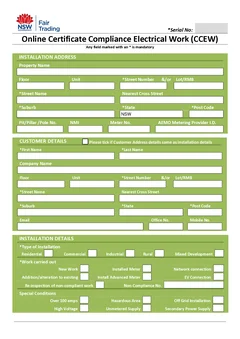
Current CCEW process: record the job and test details at the board, then complete and submit the certificate in the BCNSW eCert portal. Tradie Forms does not currently provide or lodge the new CCEW.
Before you sign a NSW CCEW, make sure the work sits inside your licence scope and that the right contractor, supervisor, installer, and tester details are on the certificate. A clean job still turns into rework when the person signing is not the person who can stand behind the work.
Use this as an authority check before you hand the certificate over.
If you are issuing a certificate today, start with how the NSW CCEW is lodged, then open the BCNSW eCert portal. Browse other Australian trade forms or read more in the NSW CCEW resource hub.
Contractor licence
Broadest certification authority, with real supervision and quality control behind it.
Tradesperson / supervisor
Certify work you performed or genuinely supervised, within your licence class.
NSW licence types and certification authority
NSW electrical licensing sets who can perform work and who can certify it, and your licence class controls both.
Electrical contractor licences sit at the top of the chain. A contractor can take responsibility for work performed by employees or subcontractors, provided the supervision and quality checks are real rather than a name on a form. Contractors routinely issue certificates for work they did not physically install.
Qualified supervisor licences can supervise work and certify it, but only where that oversight genuinely happened. You cannot sign off a job you never inspected.
Electrician licences let you perform electrical work and certify work you personally completed and tested. Certifying someone else's installation requires a licence class and supervision role that allows it.
The distinction that catches people out is performing work versus taking responsibility for work. Your signature is a statement that the installation complies with the applicable requirements, regardless of who pulled the cable.
NSW lists distinct pathways for contracting, supervising, and carrying out electrical work, and company or partnership contractors also need proper nominated qualified supervisor arrangements. These details change, so work from current regulator information and your actual licence conditions rather than a team rule someone set years ago.
Who can sign what
Work you completed yourself
If you installed and tested it, any appropriately licensed electrician can issue the certificate for that job, subject to licence scope. Your signature certifies you did the work and that it meets the applicable requirements.
Check scope before you start. High-voltage authority, restricted classes, and specialist endorsements still apply. Do not certify work outside your licence even when you are confident on the tools.
Work you supervised
Contractors and qualified supervisors may certify supervised work where the oversight was genuine: present for critical stages, workmanship reviewed, test results verified before sign-off.
Supervision is not signing a form at the end of the week because the apprentice said it went fine. Keep the notes and photos that show what you checked.
Subcontractor work
Contractors who issue the certificate for subcontracted work accept full responsibility for the installation, not just the paperwork. Before you sign, confirm subcontractor licensing, review test results and board labelling, inspect critical terminations and protection devices, and keep the evidence in the job file.
If you would not put your name on the work after a walk-through, do not put your name on the certificate.
Contractor obligations in practice
Contractors carry the heaviest load because they often certify work they did not touch. Day to day that means verifying subcontractor licences before they start, defining who completes test records and who signs, storing supervision evidence with the job file, and checking that insurance covers work you certify for others.
Company policy matters as much as licence class. Some businesses centralise all certification through the contractor licence holder; others delegate to qualified supervisors on site. Either works, provided the authority matches the licence and the file supports the signature.
Qualified supervisor boundaries
Qualified supervisors sit between solo tradespersons and contractors - more flexibility than an electrician working alone, less than a contractor taking company-wide responsibility.
In practice: be on site for the critical phases you will certify, document what you inspected and when, never sign for work you only heard about second-hand, and keep training current so your certification reflects current standards.
If you are employed by a contractor, follow their process even where your licence allows independent certification. Mixed processes create the gaps that show up when something goes wrong.
How do you make supervision visible in the record?
Real supervision leaves a trace, and that trace is what you produce when someone asks. It does not mean documenting every conversation. It means the responsible person can explain what they checked: critical installation stages, test results, defects, scope changes, and the final inspection.
Put the job reference on photos, notes, and tester output so they do not end up as a loose collection in someone else's phone. For apprentices and provisional certificate holders, do not use a certificate as a shortcut around the supervision arrangement - check the conditions that apply to that individual and have the authorised person take the required steps before sign-off. If the person who normally certifies the crew's work is away, resolve that before the customer is promised a completion date.
Common authority mistakes
Signing for work you did not see. Helping a mate finish paperwork is not supervision.
Certifying outside licence scope. Match the job to your licence class and endorsements, not to your confidence.
Weak files. Compliant work with no test records or supervision notes is hard to defend when someone asks questions later.
Assuming the subcontractor handled compliance. The person signing owns the certificate.
Retrospective certification. Issuing weeks after energising, without fresh verification, is risky. Memories fade and site conditions change.
For the document-level version of these errors, see common CCEW mistakes.
Work carried out by another business
Subcontracting does not remove the need for a clear responsibility line. Agree at the start who performs the work, who tests, who gathers the evidence, and who issues the record. A contractor should not be surprised by a form that needs signing at the end of the day - the person taking responsibility needs the opportunity to inspect and verify.
When a handover is unavoidable, send the work description, address, circuit information, test results, photos, and defect notes together. The receiving supervisor can then review real evidence instead of a verbal summary. If the evidence is insufficient, return to site or get the missing information before certification.
Regulators and enforcement
NSW authorities treat certification seriously, and the pattern across them is consistent: they want evidence that the person who signed understood the work and verified compliance.
SafeWork NSW investigates electrical safety incidents and audits work practices, and will ask for test records, photos, and the issued certificate. Licensing authorities can impose conditions, suspension, or cancellation for inappropriate issuance. Councils and certifiers compare certificate details to the installation during approvals, where mismatched addresses or work descriptions delay sign-off. Insurers may review certification when processing a claim, and a certificate that does not match the installation creates problems for everyone.
Check the licence record before the job becomes urgent
Licence questions are easiest to solve before the quote is accepted. Confirm the business arrangement, who is doing the wiring work, who is supervising it, and who will be responsible for certification.
If the job sits outside your normal scope, do not wait until the board is live to discover the nominated person is unavailable. Read the current NSW electrical licence information for the licence or certificate that applies to the work.
Solar, batteries, and newer install types
NSW jobs increasingly include solar, batteries, EV chargers, and smart gear. Licence scope and supervision rules still apply.
Where the job sits outside your usual work, check current NSW guidance and your licence conditions before you sign. When in doubt, escalate to the contractor licence holder or decline to certify until the right person reviews the installation. A delayed certificate is cheaper than a licence investigation.
Certification and submission are separate steps
The authority to do or supervise electrical work and the act of completing the certificate are connected. The person who performed the safety and compliance tests must submit the current CCEW through the BCNSW eCert portal. Keeping the portal confirmation with the work records closes the loop.
Practical habits before you sign
Run this check at the board:
- Licence number and expiry are current
- Installer, tester, and supervisor fields match who actually did the work
- Work description matches what is installed, not the quote title
- Test results are complete and recorded on the certificate
- You could produce photos and notes if asked next week
Tradie Forms does not currently provide or lodge the new NSW CCEW. It also does not determine your licence authority or inspect the work. The responsible licensed person checks the work, completes the portal fields and follows the current process.
Next steps
Confirm the authority before the work starts and the evidence before you submit. Open the BCNSW eCert portal, or browse other Australian trade forms.
Official references
Check NSW electrical compliance requirements, NSW electrical licence types, the BCNSW eCert portal, and Service NSW submit a CCEW before certifying a job.