Tradie Forms: prepare the NSW Class B asbestos removal control plan before work starts, then keep clearance and completion records with the same job. One section at a time, saved licence details, missing-field checks, official PDF preview and a clean download keep the paperwork close to the site.
NSW asbestos paperwork has two different job-site moments. Before removal starts, the removalist needs the control plan ready for the work area, workers, site controls, PPE, RPE, method and waste. After the non-friable removal area has been inspected, the clearance certificate needs to show what was checked and whether the area can be reoccupied.
Those moments are connected, but they should not be mashed into one rushed admin task. The plan is about doing the work safely. The clearance is about the condition of the area after the removal work.
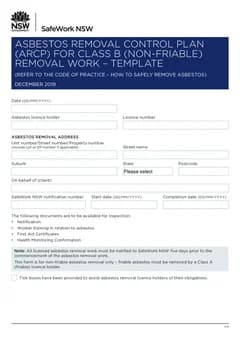
Use the NSW Class B asbestos removal control plan for the SafeWork NSW ARCP layout, and the NSW non-friable asbestos clearance certificate SW08272 for the no-air-monitoring clearance layout. You can also browse NSW building forms.
Where does the ARCP fit?
SafeWork NSW says a licensed asbestos removalist must prepare a site-specific asbestos removal control plan before work begins. The Class B template is for non-friable removal work and includes plan details, ACM identification, informing parties, nominated supervisors, workers, emergency planning, site plan, PPE, RPE, equipment, removal method, waste management and sign-off.
The official SafeWork NSW Class B asbestos licence guidance says a Class B licence is needed before removing more than 10 square metres of non-friable asbestos or asbestos-containing material, or asbestos-contaminated dust from that removal. Class A licence holders can also remove non-friable asbestos.
That does not mean every small task should be treated casually. It means the paperwork should match the licence, job type, work area and current official guidance. For a section-by-section fill guide, see the Class B ARCP on-site guide.
Tradie Forms maps your entries onto the SafeWork NSW ARCP PDF layout. It does not decide whether the job is licensed asbestos removal work, whether the licence class is right, or whether all controls are adequate.
Where does the clearance certificate fit?
The non-friable asbestos clearance certificate is a later record. The SafeWork NSW SW08272 PDF records client details, removal work details, inspection details, visual inspection answers and the declaration by the competent person. The form includes a visual inspection section that records whether no visible asbestos remains as a result of the removal work and whether the area can be reoccupied for demolition or other work.
SafeWork NSW guidance says either a licensed asbestos assessor or a competent person can assess Class B asbestos removal work. The clearance person and removalist details need to be clear in the job file.
Use NSW asbestos clearance SW08272 when the inspection and declaration details are ready to capture on the official layout. For field detail on that form, see the SW08272 guide.
How do you build one job record?
The best asbestos paperwork habit is to keep the start and finish records together.
Before removal starts, store:
- SafeWork notification details where required
- Site-specific ARCP
- Asbestos register details where relevant
- Photos of the removal area
- Site plan
- Worker and supervisor details
- Informing party records
- PPE, RPE and equipment details
- Waste management plan
After removal and clearance, add:
- Clearance certificate
- Inspection date and time
- Removalist and supervisor details
- Areas inspected
- Visual inspection outcomes
- Photos, waste docket or disposal notes where relevant
- Completion email or client copy
That record helps the office, client, supervisor and future reviewer understand what was planned, what was removed, who was involved and what was handed over.
Common paperwork gaps
The control plan is generic
A control plan should match the actual site. Include the removal area, access, waste storage, decontamination area, emergency facilities, services and site controls. Generic text is not a substitute for site-specific planning.
Informing parties are not recorded
The SafeWork NSW ARCP template includes informing parties and people. Capture who was informed while the site contacts are fresh.
The site plan is left blank
The site plan is one of the most useful parts of the record. It helps show the removal area, waste route, security, signage and emergency equipment. In Tradie Forms, use the site plan section and attach or create the plan before download.
The clearance is separated from the removal record
The clearance certificate should live with the ARCP and removal records. If it sits in a different email folder, the job file is harder to follow.
Licence and contact details are stale
Saved licence details help repeat jobs move faster, but they must be checked. Licence holder, removalist, supervisor and declarant details need to match the actual job.
What should you write clearly in the ARCP?
The ARCP should help the crew understand the job before work starts. It should also help the licence holder show what was planned.
Pay close attention to:
- The exact asbestos or ACM identified for removal
- Location and quantity
- Condition of the material
- Who has been informed
- Supervisor and worker details
- Emergency facilities and first aid details
- Site plan controls
- PPE and RPE selections
- Equipment checks
- Removal method from preparation through completion
- Waste handling and disposal arrangements
If a section does not feel specific to the site, improve it before download. A plan that could belong to any job is not doing enough work for this job.
What should you write clearly in the clearance record?
The clearance certificate should make the inspection moment clear. Identify the client, removal site, licensed removalist, inspection date and time, area inspected, and visual inspection answers.
If the clearance covers only one part of a property, say so in the work area details. If the removalist supervisor is different from the licensed removalist, keep that contact detail in the record. If photos or site notes support the clearance, store them beside the finished PDF.
The completion should let the client understand what area was inspected and what the clearance declaration says. It should also let your office find the certificate later without searching through phone photos.
A better completion rhythm
Use a simple start-to-finish rhythm:
Step 1
Confirm pathway and licence
Before anything else
The licence class decides which records the job needs.
Step 2
Prepare the ARCP
Before removal starts
Site plan, controls, worker and supervisor details, kept accessible on site.
Step 3
Remove and record
During the work
Supporting records built as the work happens, not reconstructed after.
Step 4
Clearance inspection
After the area is inspected
The clearance record closes the job, and only after the inspection.
The control plan has to exist before the work, not be written to match it afterwards.
- Preview both official PDF layouts
- Store the ARCP, clearance certificate, photos and waste records together
If the removal method, work area, supervisor, waste pathway or timing changes, the record should show what changed. Do not leave the finished ARCP looking like the original plan if the job moved in a meaningful way.
Name the clearance PDF with the site address, inspection date and certificate type. Store it beside the ARCP, not in a separate downloads folder. Asbestos jobs can be reviewed long after the work. A clear file name and one job record save a lot of searching later.
After download, keep a record of how the plan or certificate was handed over. That might be an email, job software activity, client portal entry or signed site document. For the ARCP, keep the record showing it was available before work started. For the clearance certificate, keep the record showing the client or relevant site contact received the finished PDF.
Tradie Forms helps you complete the official layouts. It does not replace safety judgement or regulatory decisions.
Next steps
Start the NSW Class B asbestos removal control plan before the removal work begins. Use the NSW asbestos clearance certificate SW08272 when the non-friable clearance inspection is ready to record, or browse NSW building forms. For work in Victoria, use the separate WorkSafe Victoria asbestos removal notification guide so the Victorian notice periods and form stay separate.
Official references
For current requirements, check the SafeWork NSW Class B asbestos removal licence page, the SafeWork NSW licensed asbestos removalist guidance, the SafeWork NSW Class B ARCP template, the SafeWork NSW non-friable clearance certificate SW08272, and the SafeWork NSW licensed asbestos assessor guidance.