Safety switch testing is one of the first places a CCEW comes unstuck. If an RCD result is missing, unclear, or out of range, you are back at the board instead of handing over the certificate.
This guide covers what to record while the tester is still in your hand: device identity, the measured results, the conditions, and any follow-up work before you issue the certificate.
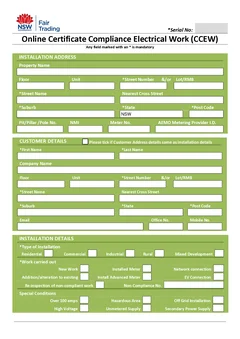
Log RCD results in the job record before you leave site. What changed with the NSW CCEW explains where those results go now, then enter the certificate details in the BCNSW eCert portal. Read more in the NSW CCEW resource hub.
What the certificate needs from your safety switch testing
The certificate has to show that each safety switch was tested, how it performed, and that the result was assessed against the applicable requirements. That is a higher bar than "RCD: OK".
Residential work generally means 30mA devices on final subcircuits, with device type mattering as much as rating - electronic loads and the kind of leakage they produce are the reason type selection is not interchangeable. Commercial installations bring in more complex arrangements, including series devices where discrimination between upstream and downstream protection has to be considered.
The device requirements themselves come from the wiring rules and the relevant installation standards, and they change between editions. Work from the current edition for which circuits require protection and what the acceptance limits are, rather than the rules you learned during your apprenticeship.
Equipment and setup
You need an RCD tester suited to the devices you are testing, and it needs to be within calibration. Out-of-calibration equipment is a quiet way to invalidate an entire day of results, and it usually surfaces long after the certificates have gone out. Keep the calibration certificates where you can produce them.
Plan the isolation before you start. In installations with multiple RCDs you will need to isolate circuits to prevent nuisance tripping during testing, which often means temporarily disconnecting sensitive equipment - computers, alarm systems, medical devices - that test currents could disrupt or damage. On an occupied site, agree that disruption with the customer before you begin rather than after something reboots.
Environmental conditions matter to both the device and the instrument. Temperature in particular affects RCD response. Where conditions are unusual enough to influence results, note them with the result.
Set up the record before you start the sequence. Give each device a location and circuit label that another electrician can match at the board, note the tester used, and keep the calibration reference with the job. That turns a row of trip times into evidence tied to the right device and instrument.
The testing sequence
Visual inspection first
Check for physical damage, correct labelling, appropriate rating, and installation consistent with the manufacturer's requirements. Look for overheating, corrosion, and mechanical damage.
Verify the device type and rating actually suit the circuit. Fitting a device of the wrong type for the load is a recurring find, and it is the kind of error that passes a trip test while leaving the circuit inadequately protected.
Test button
Press it. The device should trip immediately, then reset cleanly without sticking or excessive force.
That confirms mechanical operation only. It tells you nothing about trip time or electrical performance, which is why a certificate backed by nothing but a button press does not hold up.
Electrical performance tests
Connect the tester per its instructions, with correct phase and neutral connections. On three-phase installations, test each phase-to-neutral combination separately, because performance can vary between phases.
The standard sequence runs in three parts. The figures below are the ones commonly applied to a general-purpose 30 mA device:
Half rated current (15 mA on a 30 mA device). The device should not trip, typically over a test duration of around two seconds. A device that trips here is operating too sensitively and needs replacement.
Rated current (30 mA on a 30 mA device). A general-purpose RCD is commonly expected to trip within 300 ms. Record the actual measured trip time rather than a pass mark - the number is the evidence.
Five times rated current (150 mA on a 30 mA device). Commonly expected to trip within 40 ms. This verifies performance under fault conditions and is the test that speaks most directly to shock protection.
Treat those as working figures rather than the last word. Confirm the current values and time limits against the current edition of the applicable standard for the device type and rating in front of you. Selective (Type S) devices are allowed longer times than general-purpose ones, and testing them against the same numbers produces false failures.
Ramp testing
Many testers offer a ramp function that gradually increases current until the device trips, giving the actual trip threshold. It is diagnostic rather than mandatory, but it is genuinely useful for identifying a device drifting toward the edge of tolerance before it fails outright.
What to record for each device
- Device type, manufacturer, and model
- Rated trip current and device type designation
- Location and circuit identification
- Test equipment used and its calibration status
- Measured results for each test, with the actual values
- Pass or fail against the applicable limit
- Any remedial action taken and the re-test result
Photographs of the tester display showing measured values are not required, but they are cheap insurance on a job where results might later be disputed.
Record results that sit inside the limits but outside normal ranges, too. A device that passes today while behaving unusually is worth a note for whoever tests it next year.
What goes wrong at the board
Nuisance tripping during testing
Other RCDs tripping while you test one is usually background leakage rather than a fault. Measure leakage on individual circuits and add it up - cumulative leakage across several circuits can sit close to a trip threshold before you inject any test current.
The fixes are circuit rearrangement to spread the leakage, or device selection better suited to the loads actually connected. Equipment producing DC leakage components is a common cause on modern installations.
Inconsistent trip times
Varying results between tests point at internal wear or contamination, and temperature can shift response times as well. Record the range you observed and compare it against the manufacturer's specification.
Where variation is outside acceptable limits, replace the device. Adjusting RCD sensitivity is not a legitimate option and voids manufacturer warranties.
Failed reset after testing
Before condemning a device that will not reset, disconnect all test equipment and check for a genuine earth fault on the protected circuits. Use an insulation resistance tester to verify circuit integrity first. Moisture ingress and contamination can also prevent proper reset, and both are fixable without replacing the device.
Series devices and electronic RCDs
Where RCDs sit in series, only the device closest to a fault should operate, leaving unaffected circuits energised. Verifying that behaviour means applying test currents at different points and confirming upstream devices stay stable while downstream devices trip. Document the result as part of your records for the job.
Electronic RCDs can behave differently under test to electromagnetic devices, and some include self-test features that need verifying at commissioning. Check the manufacturer's testing requirements and confirm your tester is suitable - older instruments do not always give accurate results on newer electronic devices.
On installations with variable speed drives, switching power supplies, or extensive electronic equipment, expect higher background leakage and plan the testing around it rather than treating each nuisance trip as a surprise.
Can you issue the certificate with a failed RCD?
Not for work you are certifying as compliant. A safety switch that fails its test is a defect that has to be rectified and re-tested before the certificate goes out, and the sequence of fail, replace, re-test belongs in your notes.
The judgement call is scope. A failed device on a circuit inside your work description blocks completion of that work. A pre-existing failure on an unrelated circuit outside your scope is reported to the customer as a defect rather than silently absorbed into your certificate. Either way it gets written down - see reporting electrical installation defects for how to word it, and common CCEW mistakes for the errors that follow a rushed re-test.
Next steps
Record safety switch results while you are still on site, then check the eCert before you submit it. Every device should have a measured value against it, not a tick.
Tradie Forms does not currently provide or lodge the new NSW CCEW. Complete it in the BCNSW eCert portal, or browse other Australian trade forms.
Official references
Confirm current requirements and acceptance values against the Standards Australia Wiring Rules, SafeWork NSW electrical inspection and testing, and NSW electrical compliance requirements. Submit through the BCNSW eCert portal or via Service NSW.