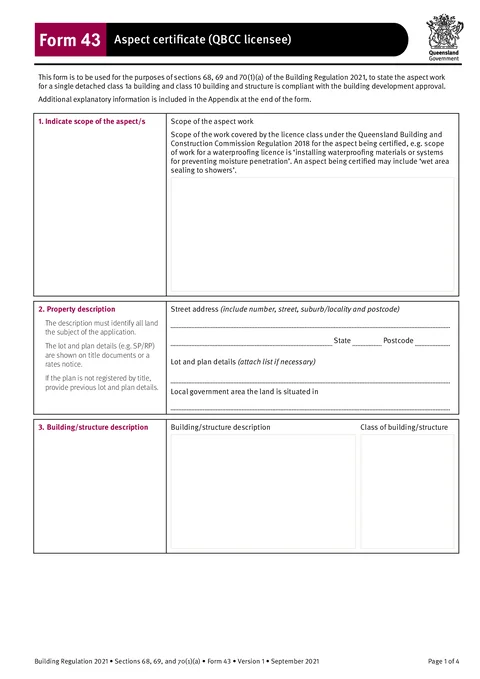
Form 43 is the QBCC licensee aspect certificate for aspect work subject to a building development approval on a single detached class 1a building or class 10 building or structure. The licensee states how the aspect work they carried out, or are authorised to certify, complies with that approval, and the finished PDF goes to the building certifier or competent person for the inspection trail. Complete it while the work, drawings and approval numbers are still in front of you.
This is the current Queensland Form 43 Aspect Certificate (QBCC Licensee). Tradie Forms follows the official section order and maps your answers onto the official PDF layout.
Appointed competent person aspect inspection rather than a QBCC licensee aspect certificate? Use QLD Form 12
Recording a stage inspection certificate rather than a QBCC licensee aspect certificate? Use QLD Form 16
Certifying accepted development aspect work rather than work under a building development approval? Use QLD Form 30
Almost every Form 43 problem comes from filling it away from the job file, or from starting the wrong certificate. Have these in front of you.
A clear decision that Form 43 is the right form
Building development approval work on eligible class 1a or class 10, not accepted development, not a stage inspection, and not an appointed competent person aspect inspection.
The building development approval and certifier request
The source for the approval number, certifier reference, and the date approval to inspect was received.
Property and land details
Street address, lot and plan, and local government area that match the approval, not only the invoice address.
Building description and NCC class
Enough to identify the building or structure on this approval.
Scope and aspect wording
Scope tied to your licence class; aspect naming the actual work and location you are certifying.
Basis materials and reference documents
Drawings, product guides, standards, inspection notes or test records you actually relied on, with numbers and revisions.
Current QBCC licensee details
Name, company, contacts, postal address, licence class and licence number for the person who will sign.
Name is the field that blocks download when empty. Signature, date, property, aspect, basis, references and licence details still need to be complete for a certificate the certifier can use.
Captures the scope of the aspect work for your QBCC licence class. This is the licence-class area of work, not a list of every room on this job.
Scope of the Aspect WorkTextOptional
Describe the kind of aspect work your licence class authorises, in the same language as the licence or the certifier's request. Keep it at licence-class scope; put the job-specific rooms, floors and components in Aspect.
Useful
Installing waterproofing materials or systems for preventing moisture penetration
Identifies the land the aspect certificate covers. These details have to match the building development approval, not only the delivery or invoice address.
Street AddressAddressOptional
The site address on the approval or certifier request. Address search is limited to Queensland and fills the street line, suburb, state and postcode. Check the result against the approval, because search returns the current postal address and an approval can predate a street renaming or a subdivision.
Lot and PlanTextOptional
The legal land description from the approval, title documents or rates notice. On new estates the street address may not exist in any council system yet, so lot and plan is often the only reliable identifier. Fill it whenever the approval carries it.
Useful
Lot 8 SP312456
Too vague
Lot 8, new estate
Local Government AreaTextOptional
The council area for the site. Address search may fill this. Confirm it near a boundary, because the LGA is part of how the certificate is matched to the approval file.
Check the finished property block against the building development approval before you move on.
Describes the building or structure covered by the certificate and its class under the National Construction Code.
Building/Structure DescriptionTextOptional
A short description that identifies what was built or altered on this approval, such as storeys and dwelling type. Take it from the approval documents or the plans you worked from, not a casual job-system label.
Useful
Two-storey class 1a dwelling
Too vague
House
Class of Building/StructureTextOptional
The NCC class on the approval, for example Class 1a or Class 10a. Form 43 is for eligible single detached class 1a and class 10 work under a building development approval, so a wrong class is a sign you may be on the wrong certificate.
Describes the aspect or aspects of work this certificate covers. This is the field the certifier reads first when they need to know what you certified.
Description of Aspect/s CertifiedTextOptional
Name the actual work and location on this job: rooms, floors, facade, system or stage. Do not restate the licence class alone. A broad claim that sounds like whole-trade coverage will be queried when only part of the work was certified.
Useful
Wet area waterproofing to main bathroom, ensuite and laundry, including floor wastes
Too vague
Waterproofing
If the builder or certifier needs more than one aspect covered, clear separate certificates beat one vague certificate that invites follow-up.
States why you are giving the certificate and which tests, specifications, rules, standards, codes of practice or other publications you relied on.
Basis of CertificationTextOptional
Point to the material you actually used: inspection method, product specification, engineering note, applicable standard or code. As per plans and Installed to code are usually too thin for the certifier file.
Useful
Visual inspection against AS 3740-2021 and approved waterproofing specification WM-04
Too vague
As per plans
Do not pad the field with standards or publications you did not use.
Lists the documents that support the certificate so a later reader can find them in the job file.
Reference DocumentationTextOptional
Identify drawings, product guides, engineering plans, test records or inspection notes with numbers, titles and revisions where available. Vague entries such as Plans supplied by builder leave the certifier without a trail.
Useful
Waterproofing detail WM-04; wet area layout plan A-03 rev B
Too vague
Plans supplied by builder
Keep the named documents with the finished PDF in the job record so the certificate and supporting file do not drift apart.
Links the aspect certificate to the building certifier's file and the building development approval.
Building Certifier Reference NumberTextOptional
The certifier's own reference for this job, from the certifier request, portal or correspondence. Do not reuse a number from the last job for the same certifier or builder.
Building Development Approval NumberTextOptional
The approval number on the current building development approval. Check every digit against the approval document or certifier request, not an invoice or a saved text snippet from a previous site.
Wrong numbers here are a common reason a clean-looking certificate is sent back for rework.
Your details as the QBCC licensee giving this certificate. The official form requires an appropriate class of licence for the aspect work, or authority under the QBCC Regulation to give a QBCC licensee certificate for that aspect work.
NameTextRequired
Legal full name of the QBCC licensee who is giving the certificate. Licence check can fill this when you look up the licence number; confirm the result matches the person who will sign. This is the field that blocks download when empty.
Company Name (if Applicable)TextOptional
Company name when the licensee trades through a company. Leave blank when you are certifying as an individual only.
Contact PersonTextOptional
The person the certifier or office should call about this certificate when that is not the same as the name above.
Business Phone NumberTelOptional
A business landline or main office number for follow-up on this certificate.
Mobile NumberTelOptional
A mobile the certifier or builder can use while the certificate is still live on the job.
Email AddressEmailOptional
The email used for this job's certifier and builder correspondence.
Postal AddressAddressOptional
Postal address for the licensee. Address search is limited to Queensland and fills street, suburb, state and postcode. Check it against current business records after a move or company change.
Licence ClassTextOptional
The QBCC licence class that covers this aspect work. Licence check can fill it from the licence number; confirm it still matches the aspect you are certifying after renewals or class changes.
Licence NumberTextRequired
Your QBCC licence number. Use Licence check against the QBCC register to confirm the number and fill name and licence class; check the filled values before you sign.
Date Approval to Inspect Received from Building CertifierDateOptional
The date the building certifier's approval to inspect this aspect arrived, from the email, work order or certifier portal. The field cannot be set to a future date. It is a different date from the signature date when you finish the certificate later.
Save this section as Licensee Details to prefill it on your next Form 43 for the same QBCC licensee.
Check name, company, licence class and licence number after renewals, business changes or staff changes before you sign.
Signs the certificate as the QBCC licensee named above.
SignatureSignatureOptional
Sign as the QBCC licensee after scope, property, building, aspect, basis, references, certifier numbers and licence details are correct. You can use a saved signature; check the preview so the stamp sits cleanly in the signature box on the official PDF. Do not sign for someone else, and do not sign while the aspect wording still overstates the work.
DateDateRequired
The date you sign the certificate. Today and Yesterday shortcuts are there for on-site completion. The field cannot be set to a future date. This is a different event from the approval-to-inspect date.
Read the certificate wording on the form before you sign. Confirm the aspect, approval number and licence class match the job you are handing over.
Accepted development may need Form 30, a stage inspection may need Form 16, and an appointed competent person aspect inspection uses Form 12. Confirm there is a building development approval for eligible class 1a or class 10 work before you start typing.
Treating scope and aspect as the same box.
Scope connects to the licence class. Aspect names the actual work and location on this job. One-word labels in both fields force the certifier to call you.
Writing aspect wording that covers work you did not certify.
All waterproofing is wrong if you only certified the ensuite and laundry. Name the rooms, elements or drawings actually covered.
Leaving the basis as as per plans.
The form asks which tests, specifications, standards or publications you relied on. Point to real drawing numbers, product guides, inspection notes or standards you used.
Copying certifier or approval numbers from the last job.
One wrong digit disconnects the certificate from the certifier file. Take both numbers from this job's approval or certifier request.
Leaving the approval-to-inspect date blank or guessing it.
The official form includes the date approval to inspect was received. Check the certifier email, work order or portal before you finish the PDF.
Signing with stale licence details.
Renewals, company changes and staff changes leave old name, class or number on the certificate. Check full name, licence class and licence number against current QBCC records before you sign.
Give the finished PDF to the building certifier or competent person for the inspection trail. Keep a copy with the job records rather than leaving it only in downloads.
Name the file so the aspect is obvious.Form 43 - 45 River Tce - wet area waterproofing.pdf is easier to find than a generic download name when the certifier asks for a re-send.
File it with the approval and the certifier request. The certificate alone does not show what was approved or why you were asked to inspect. Keep the building development approval details, approval to inspect, drawings and product documents, photos or inspection notes, and related Form 12, Form 16 or Form 30 records where they apply.
Keep the supporting references with it. Documents named on the certificate should sit in the same job folder so a later query does not mean rebuilding the file from email.
Check the current Business Queensland requirements for your job. Retention and how the certifier uses the certificate sit with the approval pathway.